
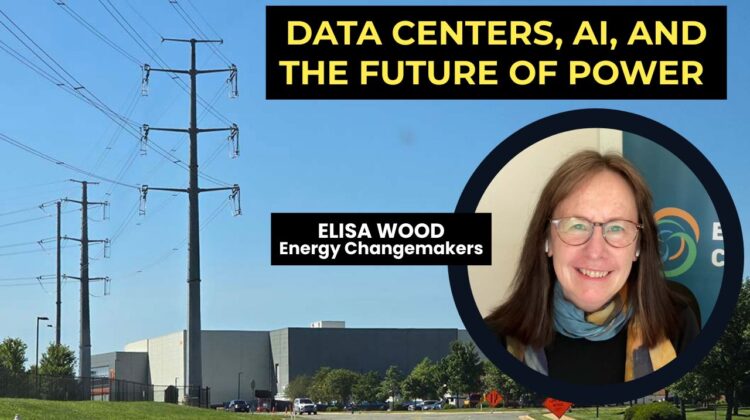
Could data centers help reshape the power grid? The boom in AI infrastructure is creating challenges for data centers, utility providers and power grids. To help us understand the state of play between data and energy, we turned to Elisa Wood, the founder of Energy Changemakers, which focuses on the future of distributed energy. Elisa has been covering the energy sector for years, and many of you may know her work at Microgrid Knowledge.
We discuss the intersection of energy and data, the potential for innovation and new business models., and the prospect for more data centers with on-site power generation, and what that might mean for the future of the grid.
Join host Rich Miller as he and Elisa Wood examine data centers, AI and the future of power.
Here’s our discussion.
00:00 – Intro and background on Elisa Wood
00:45 – The energy sector’s love-hate relationship with data centers
09:20 – AI demand and the importance of “time to power”
14:30 – On-site power is coming, at Internet scale
16:30 – Regulatory considerations with on-site power
18:45 – How decentralized data center power might shift the future of the grid
21:30 – Natural gas as the bridge to nuclear
23:00 – Communication gaps between the utility and data center sectors
28:00 – Server waste heat reuse and community relations
32:00 – Business model innovation on the utility side
At Data Center Richness we demystify technology and explain why data centers matter, and what comes next for the Internet, cloud computing and AI. Host Rich Miller is a journalist and analyst who has been covering the data center sector for 25 years.
LINKS FROM THIS SHOW :
Energy Changemakers (Elisa’s Company) https://energychangemakers.com/
TRANSCRIPT
Here is a full transcript of the video “Data Centers, AI and the Future of Power” with host Rich Miller and guest Elisa Wood.
Rich Miller: electricity is the lifeblood of any data center. With the current boom in AI infrastructure, the data center industry is seeking more energy than ever before, creating both challenges and opportunities for utility providers and power grids. To help us understand the state of play between data and energy, we turn to Elisa Wood, the founder of Energy Change Makers, which focuses on the future of distributed energy. Alisa has been covering the energy sector for years, and many of you may know her work at Micro Grid Knowledge. Today we discuss the intersection of energy and data and the prospect for more data centers with on-site power generation and what that might mean for the future of the grid. Here’s our discussion. Welcome to data center richness. I’m Rich Miller, and I’ve spent 25 years telling the story of data centers, cloud computing, and AI infrastructure. In this podcast, I’m sharing conversations with the innovators building our digital future. Now here’s our show.
Elisa Wood: Welcome to Data Center Richness. Thank you, Rich. It’s great to be here. I’m very excited about our conversation today.
Rich Miller: So you’ve been covering the energy industry for for many years, and right now with energy change makers, you’re writing and thinking a lot about the distributed energy and ways of working outside the historical framework of how energy has worked in this country. As someone who’s seen the growth of the data center boom from the energy side of defense, how is the the growth of a data center demand being viewed by folks in the energy sector, what are the things that are on their minds as they they look at all this AIdriven interest in more power capacity?
Elisa Wood: Well, first of all, biggest thing on their mind, I mean, you cannot have an energy discussion these days without AI and data centers coming up. It’s it’s the topic. Um, it’s interesting because it’s kind of like the industry is of two minds, I would say they love it and they hate it. Let me explain first why they love it. And maybe this is sort of apparent, but uh for a long time there was just no growth in the electric power sector, and you know, like 20 years of just flat flat growth. So, you know, not not a great industry to be in. Most of the activity that was going on was not about um capturing new electric demand or serving new electric demand. It was about um trying to replace one kind of generation with another kind of gen generation with, you know, the clean energy sector trying to replace the older gas fired uh coal fired kind of plants. So now suddenly with this growth in demand that’s starting to occur because of data centers that’s changing.
What we’re seeing now is a a pursuit of new business basically. So this is just a huge deal. I mean, it’s incredible. It started about three years ago. So we started to see electric demand increase a bit. It started in Texas. It started in North Dakota. And the third place we started to see electricity demand rise was surprise, surprise, Virginia, which is also also happens to be where I live. So I catch a lot of the local news about what’s happening here with data centers citing. But what’s really important to the power sector is not really what is now. It’s what’s next. Because this industry, it lives and dies based on forecasts. And that’s because it takes a long time to build power or transmission lines. It takes years, maybe even a decade or more to build these things. So they’re always looking ahead. And right now what they’re looking at really gets them excited. Um, some there’s a lot of different figures out there about how much growth AI is likely to cause in electric demand. Um, one figure I saw recently from grid strategies was about 16% Um I think that was over the next five years. So not not a long time. Um, and data centers now use I think about 4% of US electric supply. Yeah, that’s about right. And the Department of Energy is expecting that to rise to between 6.7 and 12% by 2028. Again, not far away. And the Department of Energy tends to be kind of conservative um in the way it projects numbers. So it could be even higher. And I just want to put that in perspective for a minute because okay, 12% of electric supply homes use about 33 35%. That’s all the residential, you know, buildings in the United States. And now we’re talking about this one sector suddenly using 12%. I mean, it’s it’s huge.
Hence, that’s why, you know, everybody’s just talking data center, data center, data center. That’s why I would say the energy industry loves what’s happening now because if they can build if they can build for the future, they get a healthy return on on building transmission, building power plants. So suddenly, you know, they are looking like a growth sector. So they love it. Now, what I always say they hate it? Well, they don’t really hate it. It’s kind of hyperbole. But but there’s some skepticism about the growth out there. And to explain that, I guess I have to describe kind of the two sides of the electric power industry. One side is the side that builds generation. That’s utilities. Uh that’s independent power producers. They build generation. They build the poles and wires to get the generation to move from place to place.
The other side of the power industry is the demand side. And those are the folks who look for the efficiencies, the way to reduce the amount of generation that needs to be built. That might be through, you know, energy efficiency measures, might be through demand response. It might be through um energy flexibility kind of a tour of the day. Um, which is sort of about understanding the timing of electricity, timing and place. I guess the best way to explain it is that you could have a thousand megawatt need. You could say, okay, let’s build a,000 megawatts of generation. Or you could say, well, wait a minute, um we only need that thousand megawatts over in this corner here and we this corner of the grid, and we only needed from 2 to 4 p.m. and actually we’ve got enough solar during that time or batteries or whatever during that time that we could cut that in half, and and now we only need to build 500 megawatts. So that’s another way of sort of looking looking at this demand.
So those folks who are looking more at the demand side, that they’re they’re skeptical about the big growth numbers that are out there, the ones I described initially. They feel like, you know, as I said, efficiency, um these other measures, these demand side measures will bring down those numbers quite a bit. They feel like the people who build generation, the utilities, the independent power producers are sort of um I don’t want to say puffing up the numbers, but they’re leaning towards the larger numbers because it’s in their best interest to do so. Right? And they point places in history where this has happened before, you know, where we’ve kind of seen a lot of hype about demand growth. And what happens is we build power plants, we put in transmission lines, they become stranded assets. So that’s one of the big concerns. Those are sort of the two sides of things. The kind of the way in a big general sense, the way the power industry is looking at data centers, AI growth, energy growth.
Rich Miller: Right now there’s a lot of interest on the data center side about those pro projections about load growth, what’s real, what’s not. There’s discussion of are they ghost data centers, ghost requirements? And I think the way that the utility and utilities work with people who are interested in provisioning power, there’s, you know, a number of folks who will look at at that and say, well, there’s a lot of people who are, you know, asking for engineering studies and they have to be then included in the potential future load, but not all those projects are the kind that are going to make it to the finish line and actually use that power. The the interesting thing from the data center side that I’m interested in the perspective from the energy and utility companies is about timing and the timeline. You mentioned the transmissions.
Generally some of the most severe power constraints for the data center industry has been the areas like Northern Virginia that have kind of had to pump the brakes on power for data centers simply because uh the transmission networks have become pretty pretty full up. And they can’t really add power that folks had been planning on until they built more transmission, which is, as you noted, can take 10 years. There’s new transmission lines coming into Northern Virginia, uh but those are ones that were, I think the process began 12 years ago. In the meantime, all these AI companies want it yesterday. You know, when you look at the rhetoric from Open AI, what they’re really asking for is the data center operators to build a time machine, go back in time and deliver to them in the recent past. And the numbers are so large it’s hard to tell what they’re based on. You know, Microsoft and Google have pretty good sort of capacity planning history, but we’re kind of in a new era, and folks from OpenAI, for example, they talk about, you know, gigawatt, they really like to turn the dial up to 11 in just about the way they think about everything. So in terms of when the power can be built or arrive, that’s what people are talking about right now in in the data center side is is time to power. How are the the folks in in the energy industry looking at the sort of urgency of demand that you you hear from some of the largest players in the in the data center sector, is it you’re just going to have to wait, or or are there there options to uh accelerate some of these things?
Elisa Wood: Well, they would love to um, you know, build it all today. I mean, they they face the same misery over how long everything takes to build now. And it’s the combination of problems. It’s it’s regulatory delay is is one issue. Um, interconnection, hear about that all the time. There’s just too many people applying and uh, you know, they just can’t keep up with the applications. Um, and then another big one is just supply chain issues. I think I I heard somebody say the other day that it’s there’s now an 8-year wait for for gas turbines. Um, and then we have, you know, the whole tariff issue that’s come into play as well. So all of these things are really slowing down, you know, the ability to build, which again is why the demand side people are saying, “Hey, look over here, Look at ways we can be more efficient, Look at ways we can take what we already have and use it more wisely,” you know, more with demand flexibility. Um, and there’s other issues too. I mean, and this is the thing about power that I think a lot of people don’t get is it is very, very heavily regulated. Um, and regulation drives markets, and unfortunately, there’s a lot of regulatory delay, um not because somebody’s trying to hold up a project, but because there’s so much procedure that they have to go through to get from A to B. One one issue that’s coming up a lot, I’m hearing about a lot now too is who will pay for the data center power, that’s becoming a big issue in legislative arenas and regulatory arenas. And in fact, we we had a live energy change makers had a live stream yesterday with Ari Pesco and uh Eliza Martin from Harvard Law School. They had done a paper looking at problems that are occurring with utilities using what they described as um opaque accounting methods that kind of hid the data center cost and passed it on to residential or other business rate payers. It was really fascinating discussion. Um, a lot of tricky ways you can do that. Um, so so that’s that’s another thing that’s sort of stying everything. It’s like, okay, how are we going to pay for this? Obviously the utilities and not to not to suggest they’re bad actors, I’m not saying that, but they have an incentive to try to get data centers into their territory because if they can get them into their territory, it’s new load, and they can, as I said before, they can they can build and utilities get a good return on investment when they build something. So the incentive is there for them to give the data center the best possible deal they can. And so there’s a lot of people watching that, and that’s kind of becoming a little bit of a regulatory issue. I think that’s going to really kind of jump up, and I think I think the data center industry needs to pay attention to that because I think it could get in the way um of some of this sighting. But also, as you said, just trying to build things again, it’s just so hard, and building anything, not just energy infrastructure, but anything these days is really, really difficult. So um I don’t know an answer except maybe you don’t want to build big things. I don’t we don’t build anything, but there is another option here. Um, that’s what we talk about a lot at Energy Change Makers. It’s it’s distributed energy, it’s on-site energy. You can bypass a lot of problems you’re having if you build on site. Um, because a, you don’t have to worry about transmission. Um, b, you’re not getting into these regulatory hassles. You know, who’s paying for it, well, you’re paying for it. It’s right there. This using it, you own it, you’re paying for it. Um, and there’s other benefits that around like reliability, especially if you’re using certain sorts of distributed energy that would enhance your reliability. So I think that I think that on-site energy, I’m hearing more and more, and you’ve told me about it too, um that more and more data centers are looking that way. I just read about a five gigawatt project, you would know more about whether this project probably than I would, but a 5 gigawatt project in Texas uh by a developer, Energy Abundance, near Laredo, Texas, and they want to build it totally behind the meter. They want it to be solar, batteries, and dual fuel natural gas turbines, and they want to eventually um flip those gas turbines over to green hydrogen, which they would produce also on site, which makes this all really fascinating. So you’re seeing that kind of innovation where data centers are looking at on-site options and trying to figure out a, how can we do it on site so we can skip over all this other hassle, and and and b, if they’re they have sustainability goals, you know, now you’ve got more control. You’re not worried about, you know, the utilities getting X percentage of its power from coal and you’re buying a contract from them. So you’re getting X percentage from coal. That’s no longer a worry for you. Um, so yeah, I think I think this is the way we sort of have to start looking or, you know, looking more and more at the on-site distributed energy option for data centers.
Rich Miller: Well, they’re totally looking at it. I just uh spent a couple of days at data center world, and this was one of the hot topics of discussion is that because of the timelines, everybody sees how long utility power will take. Uh, you know, in some ways the in some situations the answer has been to go to new markets that have power and can offer a different timeline. Obviously, there’s been a lot of large projects announced in the southeast, Indiana, Pennsylvania, which was a surprise to me, but is really looming a big market partially because of its natural gas resources. But there’s other markets where people need to be, and they’re just isn’t any power. And I think that’s prompted along with some of the scale projects, a very big focus right now on either colllocated or in on-site power, usually with natural gas and and natural gas generators because that’s what’s available. There’s not an easy button, but maybe there’s a slightly faster button. One of the estimates from one of the research firms that was presenting at data center world was that between now and 2030, we could see 35 gigawatts of behind the meter power or or on-site power uh coming from the data center industry. On the show floor, there were there were giant portable gas turbines, 3 megawatt gas turbines in the expo hall. So the enthusiasm and frenzy about on-site power is very real. And I guess um one of the questions I would have for you, you deal with, you know, distributed energy a lot. What are the challenges in terms of of having that become a reality at that kind of scale, is it, you know, how much uh, you know, regulatory overhead is there when you’re just building it your own, or can these guys just, you know, go as fast as the as the supply chain will take them?
Alisa Wood: Yeah, they can’t unfortunately. There there are regulatory hurdles. Um, so one thing that came up again in this live stream we did this week at Energy Change Makers was uh, and I hadn’t thought about this before, but of course it makes sense. So there’s sort of two markets in the United States. There’s I want to say 13 states, I might be off on that, but uh there’s there’s a group of states that have um been re called restructuring. Basically, competition is allowed in those areas against the utilities. You can you can get supply elsewhere. You don’t have to buy utilities. In fact, many of the states don’t allow the utilities to own generation. It’s called retail competition. And those states are the the Northeast, um California, Texas, Illinois. So in those states it’s easier to build on-site generation because you’re not walking into a utility monopoly situation. So that’s another thing I’m curious. I I think this is something this was something new to me, and I’m curious if data centers are looking at those states. You know, it may not be that energy is their top priority. I don’t know where it is on the list exactly at this point. I know it’s gone up a lot, but um I know they have to site for other reasons besides energy. It’s interesting to me that that is a potential place where you could do more onsite, you could do more independent power contracts. Um, you might have more trouble doing that, you would have more trouble doing that in the heavily regulated with utility monopolies own um, you know, the transmission, the distribution, and the generation. So that’s that’s one one thing to look at uh one potential hurdle to overcome. Um, there’s also, you know, hurdles of spies, and I hear about this quite a bit, the data centers need a lot of energy, and distributed energy tends to be smaller projects. It’s going to be interesting to see because this industry could sort of change that. I’m I’m actually I’m fascinated by these sort of larger on-site power projects that are being proposed by data centers because if these numbers are correct that that you just said, 35 gigawatt, this this could really change the electric power grid in the United States in really profound ways. Distributed energy, on-site energy, could go from being sort of a minor player, you know, sort of something you maybe a big project is, you know, usually like maybe on a warehouse, solar on a warehouse or something like that. Now we’re talking a whole different scale that would really affect the electric grid. It would sort of change things and change things in a direction that some futurists think is almost inevitable. And that is that they foresee a day when uh on-site power distributed energy will become sort of the dominant player on the grid and that the grid the interconnected grid will be more of a backup system. So kind of like a a reverse could occur, and um I think that this this trend in data centers could hasten that that reversal.
Rich Miller: Well, the uh the location piece of that is important. It used to always be that uh data center clustering followed the network. You know, that’s why you have the data center alley in Ashurn, huge concentrations in Silicon Valley, around New York, Chicago. But now the number one site selection rule is follow the power. And that’s really remaking the map in a lot of ways. And and you mentioned uh among the states you mentioned is Texas, which has become sort of the uh this wild west playground of different kinds of innovation and proposals about how to deploy the large data center AI, you know, factories. The most prominent example being in Abolene, the Open AI project, Stargate project, which is, you know, they’re they’re starting off with 200 megawatts, but their ambition is to get to several gigawatts. And there’s a lot of proposals for different kind of things that you see in Texas where there’s the interesting mix of there’s a surprising amount of wind, a growing amount of solar available, lots of natural gas, and in some places there’s hydrogen in pipelines available or or other options. So that’s one place where there’s been a lot of interesting proposals and I think uh people are looking at at some how some of those projects come about. Um, but there’s also ones, you know, there’s different models, in some cases Bloom Energy is working directly with a utility. I think Giv Nova is doing a couple of very large uh projects where they’re they’re collate collocating folks. So mhm that’s the the sort of bridge. I look at it as a short-term long-term story in natural gas is what folks are talking about now. In the meantime, all the hyperscalers are laying the groundwork for our nuclear capability for small modular reactors. Google was talking about that this week uh so, you know, how all that kind of comes together and reshapes uh infrastructure uh is an intriguing question, and I’m fascinated to to see how it all proceeds a pace because what seems pretty clear is that, you know, there’s so much demand those numbers are so large it would take a long time for the, you know, and this might take, but but correct me if I’m wrong here that when you see the numbers that are coming out of the utilities, even if all that demand is real, it would take them a long time to be able to bring that online. In the meantime, the gating mechanism is actually the ability for the utilities to offer power and/or folks ability to to deploy it on their own. And so in a way, it’s kind of a potential bubble mitigator. Does does that make sense in terms of, you know, some of the projections we’re hearing from like Georgia Power and Dominion caught as well? The numbers are so so huge. It seems like that’s a pretty big stretch goal, and and the timing is the the key question. One of the things I’ve been hearing, I’m curious what you think about this, I’m hearing this from from people in the energy industry, kind of a complaint that that they have a hard time communicating with the data center industry. And again, I’m speaking in generalities. There is lots of great partnerships going on and wonderful things, but this this is sort of a a general underlying buzz out there. They have a hard time talking to them um for a couple of reasons. One is they say they’re, you know, they’re pretty opaque about their power use that some of them are concerned that if they reveal too much, they’re revealing information about perhaps AI development that they don’t want out there. That’s one one thing I hear. The second thing I hear, and this is kind of a funny complaint, but I’ve heard it more than once is that, you know, a company will come in with what they consider or try to get in the door with some kind of innovative proposal, and they find that the data center folks just kind of don’t have the time for it. Like they’re just we just got to get this contract. We just got to get this power against this contract. You know, this thing you’re doing with waste heat or whatever sounds really nice, but we can’t really think about that right now. Um, so, you know, I don’t know again if this is just a, you know, maybe segments of of the industry or if if it’s more general, but but those are the two reasons that I hear from energy companies that they sometimes feel like they have trouble. And I imagine that data centers are just getting barged by energy companies, especially those with sort of some new innovation because they’re the market right now. They’re that’s where everybody’s going.
Alisa Wood: But you know, on on that front, I think the secrecy thing is historically the particularly the hyperscale data center players have been very closely held when it comes to any data about the amount of resources they’re using. This has always been a story with power. They work with, you know, often there’s there’s an effort to keep those numbers from being disclosed to the public by the utility partners and uh and also there’s been some court cases over water usage has become a very large issue in some communities. And uh and as you know, in in Virginia and some of the discussions about it, that it’s kind of been the focal point for a lot of the uh community debates and and push back on the data center industry because there’s so much of it there, and in a lot of cases what they’ve tried to push for more transparency about the amount of resources that are being used when a data center comes to town. What does that mean for the availability or price of power, what does it mean for, you know, how much water they’ll need and then you have the other issues like noise and such. Despite all the the hubbhub in Virginia, there were a bunch of bills in the legislature, none of which made it into law this year. Uh there was one that had a chance, but Governor Yncan I think delayed that for a year. It’s one of the biggest challenges in terms of community relations that you have is like on the one hand, you’ll have some grants and fund some things in the community, which is great. It’s the right thing to do, but what folks really want a lot of times is like, you know, hey, what is it really going to mean for you to be here in terms of the other things that we as a as a community need, that information is is much more tightly held. You know, there’s been concern about, you mentioned before, whether the cost of data center infrastructure and power then gets ultimately passed on to other rate payers. Uh, you know, through however that’s being handled. And this is a a point of discussion now in Virginia, but like A I think or maybe it was Indiana and Duke, they’ve looked at setting up a separate tariff for large load customers, kind of code for data centers. That’s that’s really seems to be who who it’s about.
Rich Miller: What do you make of those, and is is there sort of any history of these kind of specialized tariffs for for particular customer sets?
Alisa Wood: Yeah, that’s not uncommon. I mean, there’s there there are specialized tariffs sometimes for manufacturers or or some group that that the city or the utility would like to draw in. Um, so that’s that’s not unusual. Economic development tariffs are out there. We’ll see some of that. Um, I think what we were hearing uh from the folks at Harvard was more concern about utilities sort of like there was concern about for instance transmission when you when you price transmission uh into rates that’s really hard, you know, because you think about kind of all the layers that goes through and maybe goes up through the, you know, wholesale RTOS or wholesale markets um and there’s a lot of ways that a utility can kind of take that and and disguise it, I guess. And and so I think those are the kind of concerns that are out there. I think as long as it’s really transparent, I think that’s where where kind of almost a culture clash is going on, right? Because the power industry is used to being forced to be pretty transparent because everything’s so highly regulated. A lot of numbers are out there all the time, and now they’re dealing with an industry which is not and know the numbers aren’t out there. So it’s just two two different sort of approaches. So that’s definitely an issue. There’s ways around some of these issues. I mean, a lot of it has to do with, I think especially at the community level, a lot of it has to do with figuring out models that bring the community in. Like I heard recently about um in Northern Virginia, there is a group that’s trying to work with communities to sort of proactively plan um data centers in energy. And and what they’re looking at is um taking the waste heat and this is happening in some places in Canada for example um and other places taking the waste heat from the data center and using it through a district energy system to heat the buildings like maybe the municipal buildings or some, you know, downtown buildings. So now you’re So now when you do that sort of thing, you’re coming into opinion and saying, here’s what we’re going to give you versus um here’s what we’re going to take. Here’s the water we’re going to take. Here’s the energy we’re going to take. Well, here’s we’re we’re going to give you back energy. We have waste heat. We’re going to give it back to you. You can use to heat or cool your buildings. So that that seems to be I think that’s that’s going to be sort of the that’s the cutting edge of what sort of needs to be done. Um, and that’s it’s not easy to do, but um it’s probably going to be necessary to to to stop this kind of strife or feeling that the data centers coming here to take something away because they don’t really understand produce a lot of jobs.
Rich Miller: Is that, am I right, that so that the number of construction jobs while these campuses are being built are pretty considerable, but those are, you know, they’re viewed as as temporary, uh even though above campus development with the sizes that we’re talking now, you know, uh when they build out four or five or six buildings on a campus that’s a couple of years of of work for, you know, a thousand to to 1500 construction workers on on some of these sites? The facilities themselves, you can run, you know, one of these large data centers with like 25 or 30 people. From an economic development perspective where jobs for the community was always the sort of benchmark that was used, uh they’re a different animal. Uh so there’s not a lot of jobs, but at the same time, they don’t put a lot of burden on the roads and schools, which then also offers some advantages. And the tax benefits from it for the tax base can be really considerable. Your your mileage may vary on that, but you know, Lowden County or Prince William County in Virginia, for example, are seeing very large impacts and benefits from taxes, which then allows you to do other things. Lowden can fully fund its school budget and, you know, uh and have a lot of options. But, you know, as we see there’s there’s sort of quality of life trade-off that not everybody wants data centers being as frequent an object on the suburban landscape as they are in Northern Virginia. The waste heat is a really interesting thing. I would love to see more of this in the United States. It’s much more common in Europe simply because they they have more, you know, district heating systems that are available. And uh so we’ve seen some interesting projects over there. There’s a couple in the US particularly most notably in Seattle where Amazon’s headquarters is, you know, the the heating for that comes from a data center right next door at the at the Weston building. There’s more and more uh projects like that being proposed, but it’s it’s small fry thus far. It’s not something that data centers think of or build in upfront as a community relations thing, but that sort of collaborative thinking is something that I think should be a larger part of how the industry is looking forward and thinking about how it deals with, you know, its own reputation management challenges.
Alisa Wood: Yeah, Yeah. Good point.
Rich Miller: The other thing that I I saw with the some of the structures on the utility side was there was one place in in Virginia where the utility was thinking they, I think it was cooperative, was just going to spin off a separate company just to deal with the data centers, and so they can then technically separate that out uh and uh account for it or or pay for it differently. But what do you make of that?
Alisa Wood: Yeah, that’s that’s an interesting approach, which I hadn’t heard about that, but it it makes a lot of sense, and it’s something a cooperative could probably do much more easily than an investor owned utility because that they’re usually governed by their members or if it’s a municipal utility by the municipality. While the investor owned utilities are governed by the state commissions. Um, and we saw that when the industry first restructured 20 years ago, those states that I mentioned that have retail competition where they allow companies come in and compete to offer power to customers, compete against the utilities. We saw that kind of thing happening then. Uh we saw utilities interestingly said, “Hey, you know what, this is interesting. You’re saying that somebody can come in private company and compete against us, well that means we could create a a private company that’s an affiliate of the utility, and we could go into another utility territory and compete against them”. We saw that start to happen then where like Duke was one company that did that, you know, and um the latter that utilities eventually sold those companies because it’s not in their DNA to be in a competitive business. They understand the monopoly regulated model. So a lot of them didn’t stay in the business, but um but it’s definitely one way to go to create, and they created a wall, you know, between their competitive arm and their uh monopoly arm. And I would imagine the same would have to happen here if a cooperative spun off um a private it sounds like a private company to take care of the data centers. Yeah. Um, but very interesting idea. Yeah.
Rich Miller: We’ve talked about a lot of things. I wanted to kind of close with just a broader question about the trends in the in the data center sector and all that’s happening here and whether that creates different conversations or different opportunities in the distributed energy landscape, which uh you’re tracking very closely. Do the things that are happening with data centers change the landscape or open up new possibilities?
Alisa Wood: Yes, uh distributed energy is no different than energy in general in that you cannot walk into a room without people talking about data centers. There’s there’s so much opportunity there. I think one thing that doesn’t get discussed a lot um is the fact that distributed energy can also create um great energy reliability. So we’ve talked about on-site energy, but most distributed energy is actually connected to the electric grid, and um so it’s constantly leveraging. So if you have, you know, maybe solar and storage and natural gas or some other combination of um distributed energy on your site, and you’re grid connected, you’re constantly leveraging price with the grid. So that’s one advantage. Another advantage is um that if the grid goes down, you can use your on-site energy. So that’s kind of the best of both world scenarios. And I think that um a lot of distributed energy folks see data centers as so crucial. I mean, they they can’t go down. I know redundancy is huge for for data centers um that it kind of opens a a good path for that kind of distributed energy. There’s a lot of opportunity here. There’s a lot of innovation, you know, we’re seeing work, as you mentioned, with fuel cells. Um, there’s a lot of talk about SNR coming up. There’s I’m not sure if I’m completely convinced that that’s going to happen, but but we’ll see. A lot of people don’t agree with me, so we’ll see. Um, that’s small nuclear. I think we’re going to see a lot of technological innovation. We’re going to see a lot of um business model innovation like what you just described with the cooperative, you know, creating this this spin-off. I think we’re going to see data centers really restructuring the electric grid the way we the way we use and um generate power.
Rich Miller: Wow, well, that’s that’s an interesting note and thoughtprovoking idea to close on. Alisa Wood, thank you so much for for talking to me about all things energy and data centers. I appreciate your time and and for everybody listening on the data center richness podcast. If you’ve enjoyed the conversation, give it a like and hit that subscribe button because there’s lots more coming. Lisa, thanks so much again.
Alisa Wood: Thank you, Rich. Wonderful conversation. Appreciate it..
